
Ethereum is just not meant to be a platform to construct esoteric sensible contract purposes that require a STEM diploma to grasp, however it goals to be one pillar of a unique structure for purposes on the world broad net. With this put up we’ll attempt to elucidate how this may be achieved and provides some primary examples on begin constructing a decentralized app.
Who is that this for?
This textual content is meant at those that have a primary understanding of net expertise and construct a easy javascript and html app, and wish to convert these expertise into constructing apps for the Ethereum ecosystem.
How can apps run with out servers?
At the moment servers in net apps do way more than what they had been initially supposed to. Moreover serving static net pages, additionally they preserve non-public data, deal with person authentication and cope with all of the difficult methods wherein information is analyzed and saved. All of the person pc does – a tool which might be thought-about an excellent pc when the online was invented – is to load and show that data to the person.
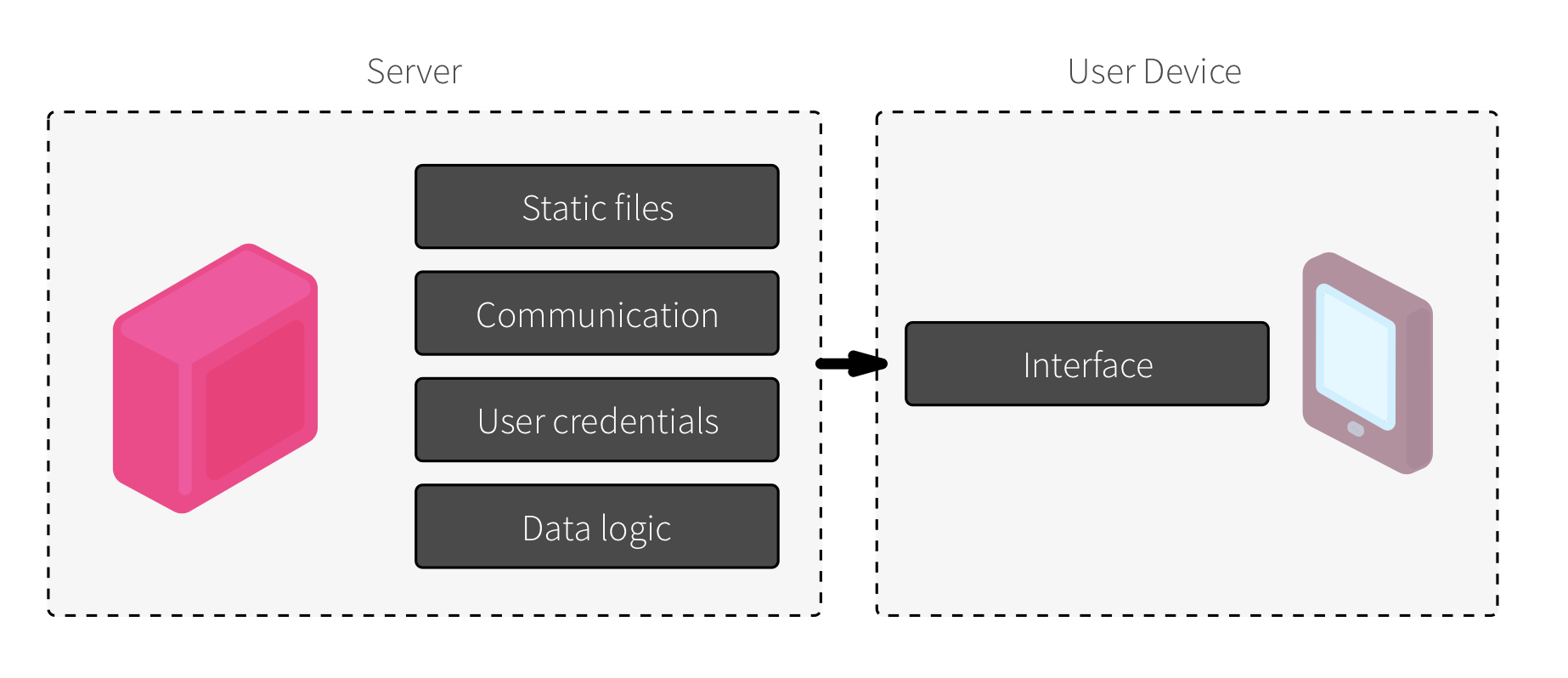 Present server fashions
As a substitute, a extra decentralized structure would enable a way more modular strategy, wherein completely different machines and completely different protocols would deal with particular duties, some on the person’s aspect and a few in specialised machines deployed on a peer to see community. Subsequently all of the Information logic (what will get saved, who saves it, resolve conflicts and so on) is dealt with by sensible contracts on the blockchain, static recordsdata are served through Swarm and realtime communication over Whisper. The person gadget retains the person authentication and runs the applying interface.
Doing this would take away the hazard of information breach and assaults as there are much less single nodes protecting tons of unencrypted information, whereas additionally eradicating the load and price of serving apps by distributing it throughout the community. Since all these protocols are decentralized, anybody can hook up with the community and begin offering a specialised service: if the person is shopping from a robust laptop computer, as an example, they will additionally serve static recordsdata to community neighbors.
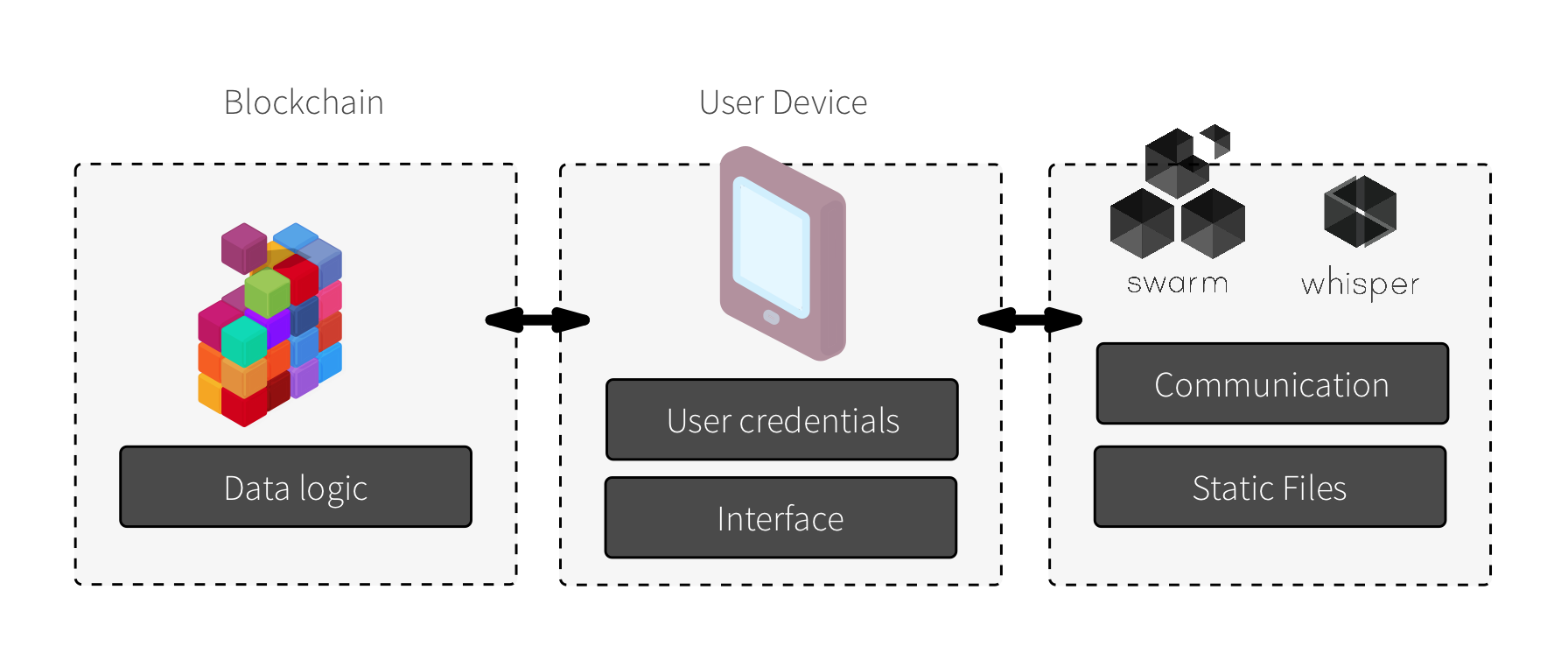 Decentralised Server fashions
A decentralized structure additionally encourages innovation: for the reason that interface is indifferent from the information, anybody can provide you with a brand new interface to the identical app, making a extra vibrant and competing ecosystem. Arguably, some of the attention-grabbing and revolutionary intervals in Twitter historical past was when it served principally as a central information hub and anybody may construct their Twitter Software.
See it working
If you wish to experiment with the app earlier than studying it, we suggest you obtain Mist and skim our introductory tutorial to set up the app and run it. When you simply wish to see the entire app as a substitute, you’ll be able to obtain it immediately from the Stake Voice Github repository.
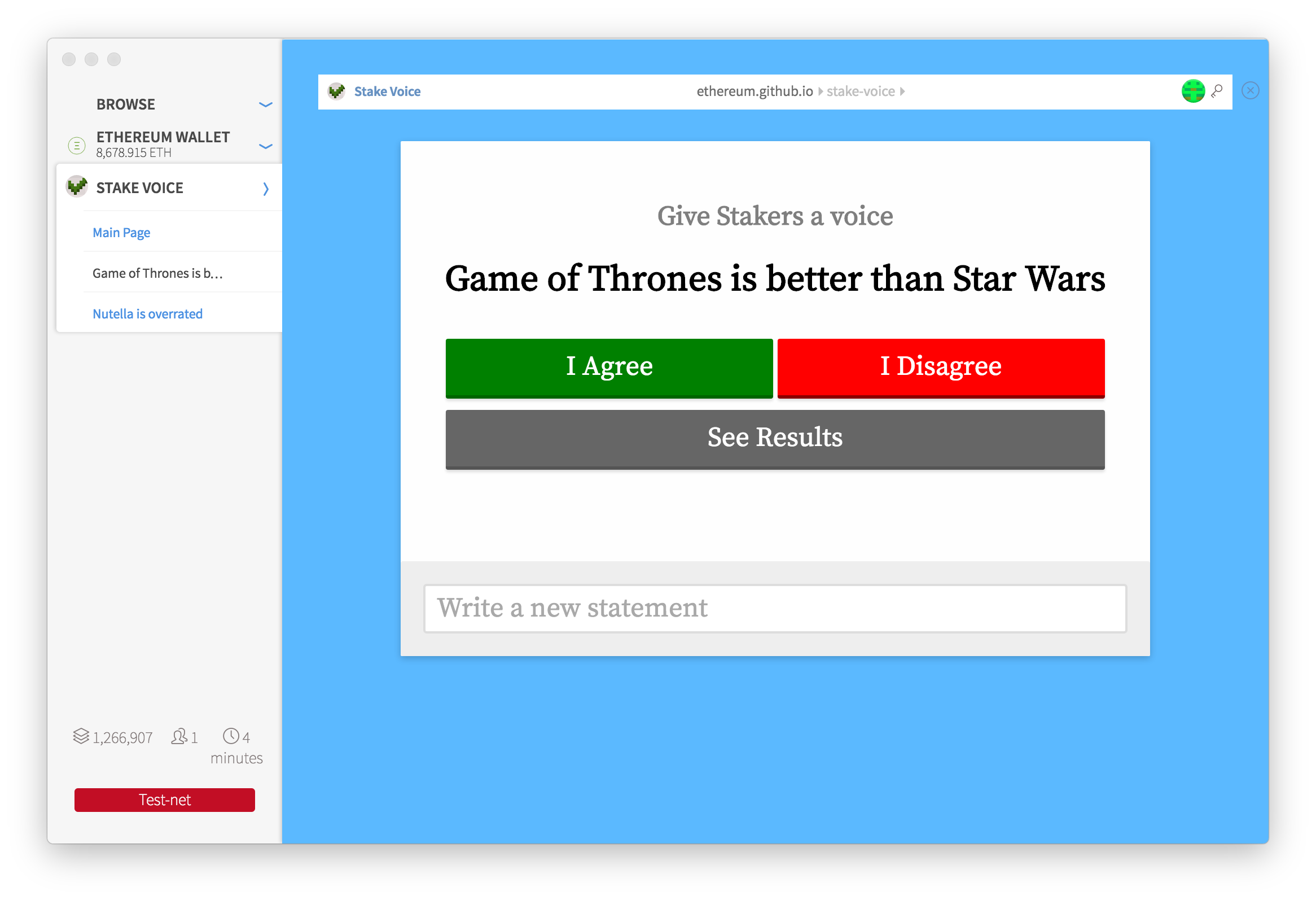 Stake Voice operating on the Mist Browser
Let’s get to it
We’re going to construct a quite simple utility known as “Stake Voice”. The thought is to permit ether stakers to vote on something they need, and the app will tally the full ether steadiness of all those that agree or disagree with the assertion.
The app underlying contract is written in Solidity, a javascript-like language and could be very easy:
contract EtherVote {
    occasion LogVote(bytes32 listed proposalHash, bool professional, tackle addr);
    perform vote(bytes32 proposalHash, bool professional) {
        if (msg.worth > 0) throw;
        LogVote(proposalHash, professional, msg.sender);
    }
    perform () { throw; }
}
The primary line units up the contract title and the second creates an occasion known as “LogVote”, which is able to output within the log the next:
- a hash of the proposal being voted on
- if the voter agrees or disagrees with it
- the tackle of the voter
The perform “vote” will then fireplace the log, which the applying later will depend. It additionally has a verify that no ether could be despatched by accident. The “nameless” perform is executed when any ether is deposited on the sensible contract and can then robotically reject it.
If you wish to study extra about coding in Solidity we suggest you begin on the ethereum solidity tutorials, learn the official documentation web page and take a look at it in your browser utilizing the on-line compiler.
That is primarily it: you select a hash, select a aspect and execute Vote(). So how does this interprets right into a polling app?
Serverless Structure
Following the precept of KISS, we’re doing the minimal product doable that’s nonetheless usable, which means we can’t be utilizing databases for storing proposals or utilizing any characteristic that requires something aside from vanilla javascript and pure html.
So we’ll use the URL of the app itself to maintain the proposal textual content, and we’ll use that to show it to the person and generate a hash that may then be used to verify the votes. The customers can use social media to share which proposals they wish to debate or just use direct hyperlinks.
// On the preliminary startup perform:
proposal = decodeURI(getParameterByName('proposal'));

//
Begin with fundamentals
So seize your favourite html framework and get a primary web site in your native machine and open it on Mist. All pages in Mist have entry to a javascript object known as web3 which is able to the place you can be working probably the most. Very first thing we have to do is verify if web3 is current or not:
Operate init() {
...
if(typeof web3 == 'undefined') {
    // Alert the person they don't seem to be in a web3 appropriate browser
    return;
 }
Some utility builders would possibly wish to load their very own web3 object, to ensure ahead compatibility. To do this, simply add simply earlier than </physique> tag:
After which add this in your preliminary perform to load your individual customized web3 supplier:
// Checks Web3 assist
if(typeof web3 !== 'undefined' && typeof Web3 !== 'undefined') {
    // If there's a web3 library loaded, then make your individual web3
    web3 = new Web3(web3.currentProvider);
} else if (typeof Web3 !== 'undefined') {
    // If there isn't then set a supplier
    web3 = new Web3(new Web3.suppliers.HttpProvider("http://localhost:8545"));
} else if(typeof web3 == 'undefined') {
    // Alert the person he isn't in a web3 appropriate browser
    return;
}
Load data from the blockchain
You checked you might be linked to a blockchain, however which one? Is it the principle ethereum community? Perhaps a testnet or a personal community? Perhaps it is a fork sooner or later and your chain is a model new one. One of the simplest ways to verify that is to see if the contract tackle you wish to load has any code on it.
Moreover, to execute a contract you must know two basic items: it is tackle and the ABI, which shall be a json encoded file containing interface data.
var contractAddress = '0x1e9d5e4ed8ef31cfece10b4c92c9057f991f36bc';
var contractABI = [{"constant":false,"inputs":[{"name":"proposalHash","type":"bytes32"},{"name":"pro","type":"bool"}],"title":"vote","outputs":[],"sort":"perform"},{"nameless":false,"inputs":[{"indexed":true,"name":"proposalHash","type":"bytes32"},{"indexed":false,"name":"pro","type":"bool"},{"indexed":false,"name":"addr","type":"address"}],"title":"LogVote","sort":"occasion"}];
Now that you’ve got these, you’ll be able to verify if the contract exist on the startup perform:
// Load the contract
web3.eth.getCode(contractAddress, perform(e, r) {
    if (!e && r.size > 3)
        loadContract();
 })
You’ll be able to even run this command recursively, to attempt connecting to it once more utilizing one other tackle (in case you might be truly on the testnet). After you have discovered your contract you’ll be able to load it up right here:
Operate   loadContract() {
// load the contract to javascript
      ethervoteContract = web3.eth.contract(contractABI);
      ethervote = ethervoteContract.at(contractAddress);
}
You’re utilizing the web3 object to create a brand new a javascript object that may have the ability to execute all of the ethereum instructions immediately from the browser. If you wish to load solely a single occasion of the contract, then you’ll be able to even do it in a single line:
ethervote = web3.eth.contract(contractABI).at(contractAddress);
Establish the person
Realizing the person’s account reveals lots of details about the person: how a lot ether and some other tokens it has on its steadiness, and their transaction historical past. So having all apps know this by default would create an excellent cookie and could be an unacceptable invasion of privateness. Then again, requiring the person to create an person account with login data for every web site is just not solely a ache for the person, but additionally places your non-public data in command of third events, which creates big honey pots that may be breached by hackers.
As a results of this dilemma most customers have most of their private data and authentication data dealt with by a half dozen billion greenback company. Privateness shouldn’t be a compromise we settle for in trade of practicality: customers ought to have the ability to simply authenticate into any app whereas being in command of their very own private data.
Utilizing Mist, apps don’t have any details about the person, till the person decides to disclose itself to the app. Once you wish to question what in regards to the accounts, it is best to name the getAccounts perform:
web3.eth.getAccounts(perform(e,accounts){
    if (!e) {
        // do one thing with the accounts
   }
});
At the moment, the returning object is an array that holds easy accounts that the person has native entry to, however sooner or later it is going to additionally maintain sensible contract accounts the person makes use of to establish themselves. This can enable the person to have entry to options at the moment out there solely to centralized authenticators, like two issue authentication or cloud backup, and to future enhancements solely out there to sensible contracts, like permitting a couple of trusted associates to present you entry to an account for which you misplaced keys or having computerized inheritance of inactive accounts.
Every future Ethereum browser will deal with how customers establish themselves to the App. In Mist now we have two methods: both the person can provoke it by clicking the “join” button (at the moment it is simply known as a “no accounts” button) or the App can request the authentication by calling the “requestAccount” api.
Consideration: the accounts on this record are only one which the person claims to carry the important thing to, however the person has supplied no proof of doing, due to this fact you’ll be able to present a unique UI, however do not ship the person any secret data supposed solely to that account. When you require the person to show their id you want them to signal a message, whereas Mist can even assist that sooner or later, preserve it in thoughts that it will pressure the person so as to add an additional step and kind their password, so it is best to solely use that when completely crucial.
Voting
After you have the contract as an object, voting is a matter of calling it from javascript. This can pop up a Mist transaction pane, the place the person will have the ability to verify the transaction after which sort their password. So first we’ll create two clickable objects that calls a vote perform:
doc.getElementById('vote-support').addEventListener('click on', perform(){ vote(true);}, false);
doc.getElementById('vote-against').addEventListener('click on', perform(){ vote(false);}, false);
Discover that one calls the perform with a real parameter and the opposite false. The perform vote could possibly be so simple as:
Operate vote() {
    ethervote.vote(proposalHash, assist, {from: web3.eth.accounts[0]});
}
“Ethervote” is the article we created earlier than, and “vote” is one in all its capabilities, which correspond to one of many contract capabilities:
perform vote(bytes32 proposalHash, bool professional) {}We move the 2 parameters demanded by the perform after which add a 3rd object containing transaction informations, like who’s it being despatched from and optionally, how a lot fuel to incorporate or how a lot to pay for the fuel.
Consequently this would generate a panel asking the person to verify the transaction – however probably it is going to return an error as a result of at the moment the web3.eth.accounts object is an empty array by default, so you need to verify for that and if empty, request the accounts to the person:
perform vote(assist) {

     web3.eth.getAccounts(perform(e,accounts){
        // Verify if there are accounts out there
        if (!e && accounts && accounts.size > 0) {
            // Create a dialog requesting the transaction
            ethervote.vote(proposalHash, assist, {from: accounts[0]})

          } else {
            mist.requestAccount(perform(e, account) {
                if(!e) {
                    // Create a dialog requesting the transaction
                    ethervote.vote(proposalHash, assist, {from: account.toLowerCase()})
                }
            });
        }
    });
}
It’s best to solely request an account as soon as the person initiated an motion: pinging a transaction out of nowhere will deservedly irritate the person and possibly make him shut your app. If we observe abuses from apps utilizing this characteristic, we’d add extra strict necessities to when an alert will present up.
Watch the contract
Lastly, to depend up all of the votes we have to watch the contract occasions and see what votes had been solid. To do this, now we have to run this perform as soon as to begin watching the occasions, after we instantiated “ethervote”:
ethervote = web3.eth.contract(contractABI).at(contractAddress);
var logVotes = ethervote.LogVote({proposalHash: proposalHash}, {fromBlock: 1800000});
// Wait for the occasions to be loaded
logVotes.watch(perform(error, consequence){
    if (!error) {
        // Do one thing every time the occasion occurs
      receivedEvent(consequence);
    }
})
The above code will begin studying all blocks from no 1.8M (when the contract was uploaded) onwards after which execute the receivedEvent() perform as soon as for every occasion. At any time when a brand new block arrives with an occasion this perform shall be triggered once more so you will not must name constantly. So what would this perform do?
Var voteMap = {};
Operate receivedEvent(occasion) {
    // Get the present steadiness of a voter
    var bal = Quantity(web3.fromWei(web3.eth.getBalance(occasion.args.addr), "finney"));
    voteMap[res.args.addr] = {steadiness: bal, assist: occasion.args.professional};
}
From the unique solidity contract, you’ll be able to see that the LogVote occasion comes with three argumenst, proposalHash, Professional and Addr:
occasion LogVote(bytes32 listed proposalHash, bool professional, tackle addr);So what this perform does is that it’s going to use the perform web3.eth.getBalance to verify the present ether steadiness of the tackle that voted. All balances at all times return numbers in wei, which is a 1/1000000000000000000 of an ether and isn’t very helpful for this specific utility, so we additionally use one other included web3 perform which converts that to any ether unit we would like. On this case we shall be utilizing the finney, which is a thousandth of an ether.
Then the perform will save the steadiness, together with the place of the voter to a map primarily based on the tackle. One benefit of utilizing a map as a substitute of an array is that this can robotically overwrite any earlier details about that very same tackle, so if somebody votes twice, solely their final opinion shall be saved.
One other factor we may do is establish the person and present them in the event that they voted or not.
// Verify if the present proprietor has already voted and present that on the interface
web3.eth.getAccounts(perform(e,accounts){
    if (!e && accounts && accounts[0] == res.args.addr) {
        if (res.args.professional) {
            // Person has voted sure!
        } else {
            // Person has voted towards!
        }
    }
 });
Tally up the votes
Lastly, we must always add a separate perform to calculate the sums of the votes:
Why will we wish to tally up the votes on a separate perform? As a result of for the reason that vote weight relies on the present steadiness of every account, we must always recalculate the balances at each new block, occasion if we acquired no new occasion. To do that you’ll be able to add this perform that may execute robotically everytime a brand new block arrives:
web3.eth.filter('newest').watch(perform(e, consequence){
    if(!e) {
        calculateVotes();
    }
});
Lastly, as much as calculating the ultimate tally. We’ve beforehand used eth.getBalance in synchronous mode, the place the app would anticipate the results of the earlier motion to proceed. Right here, since we could be calling lots of actions each block, we’ll use it in asynchronous mode: you name the node and execute the motion every time it replies with out freezing the interface.
var totalPro, totalAgainst, totalVotes;
perform calculateVotes() {
    totalPro = 0;
    totalAgainst = 0;
    totalVotes = 0;
    Object.keys(voteMap).map(perform(a) {
        // name the perform asynchronously
        web3.eth.getBalance(a, perform(e,r) {
            voteMap[a].steadiness = Quantity(web3.fromWei(r, 'finney'));
            if (voteMap[a].assist)
                totalPro += parseFloat(voteMap[a].steadiness);
            else
                totalAgainst += parseFloat(voteMap[a].steadiness);
            // do one thing cool with the outcomes!
        });
    });
}
As you’ll be able to comply with on the code, what the app is doing is looping in every of the voting addresses and getting their steadiness, and as quickly because it returns, it is going to both add it to the professional or towards camp and sum the totals.
Just a few further caveats: when there are not any occasions, nothing shall be returned and votes will not be calculated so it is best to add a timeout perform on all capabilities that depend on occasions from the blockchain.
setTimeout(perform(){
        // If the app does not reply after a timeout it in all probability has no votes
    }, 3000);
Now you’ll be able to be happy to make use of all of your present webdeveloper foo to work no matter magic you need. Use the numbers to construct a pleasant visualization in 3D or hook up with your favourite social media to share one of the best questions.
Mist additionally tries to simplify your code by offering some primary navigation and UI strategies. In order for you your app to be header much less and occupy the total top of the mist app, simply add this to your <head> tag:
<meta title="ethereum-dapp-url-bar-style" content material="clear">And if you wish to use Mist itself to navigate in your app, you should utilize the Mist.menu object:
for (merchandise of propHistory) {
    if (merchandise.size > 0 && merchandise != 'null') {
        mist.menu.add( merchandise ,{
        title: merchandise,
        place: n++,
        chosen: merchandise == proposal
        }, perform(){
            window.location.search = '?proposal=' + encodeURI(this.title);
        });
    }
 }
One wonderful thing about ethereum is which you can increase on this straightforward contract performance without having permission: you’ll be able to add all further performance on separate contracts, protecting each single one in all them easy and simpler to debug. It additionally means different folks can use the contracts you created to their very own apps and provides new performance. In the meantime, all of the apps use the identical information and backend.
You’ll be able to play with this app dwell hosted on github pages, however this is not the canonical supply of reality, simply one of many many doable interfaces to it. The identical app can even work as an area html file in your pc or on an IPFS community and sooner or later will probably be downloaded immediately through Mist utilizing Swarm.
Some concepts on how one can attempt:
- Create an inventory of at the moment out there statements. Anybody can verify them by seeing the sha3 of the proposal textual content, so you do not want permission.
- Create threaded feedback the place customers can reply to statements after which upvote or downvote them, kind of like a decentralized stake primarily based Reddit
- As a substitute of (or along with) utilizing ether steadiness, you should utilize another ethereum token, like The DAO or Digix Gold to weight your questions in a different way. Since all that the unique contract shops is the sender, you’ll be able to verify all balances. Or possibly you’ll be able to create your individual foreign money that’s primarily based on fame, karma or another manner.
from Ethereum – My Blog https://ift.tt/6zbRhnA
via IFTTT

No comments:
Post a Comment